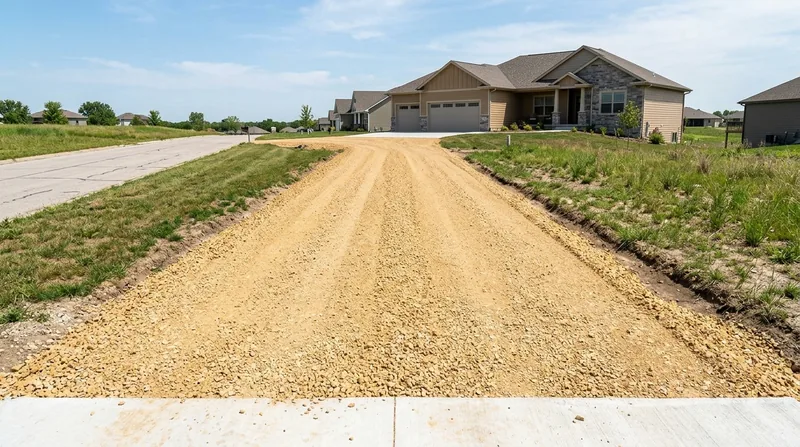




Gravel Driveway Installation & Grading in Omaha works well on the wider lots spreading west toward Elkhorn and into the newer subdivisions of Sarpy County, where the terrain opens up and the loess subgrade can be shaped to shed water effectively. Omaha's freeze-thaw winters and heavy spring meltwater demand proper crown and compaction to keep a gravel drive from rutting, washboarding, or washing away at the edges. We grade the subgrade, establish drainage pitch off the drive, and lay compacted gravel that holds up through Nebraska's seasonal swings. Gravel is a practical choice for rural and semi-rural properties where asphalt may not be the first call, and it costs less upfront than paving while delivering years of service when the base is built right. If you're considering whether gravel, recycled asphalt millings, or full asphalt paving makes sense for your property, we can walk through the trade-offs on a free site visit.
Why Gravel Driveway Installation & Grading Matters in Omaha's Loess Country
Omaha sits on deep wind-blown loess, a fine silt that sheds water well when it stays dry but loses strength and softens when saturated. The clay-rich glacial till underneath holds moisture against the base year-round, which means freeze-thaw heave is a real threat to any drive that doesn't shed water off the surface and away from the subgrade. Gravel drives on wider lots answer this problem directly: proper grading and crown move meltwater off the drive before it soaks in, and compacted aggregate stays stable through the seasonal cycle. A poorly graded gravel drive ruts, develops a concave profile that pools water, and deteriorates fast. A well-graded one with proper compaction and ongoing maintenance lasts eight to twelve years or longer.
- We establish a proper crown (high center, sloped edges) to move water off the drive and prevent ponding.
- We compact the subgrade and base course to the specifications required for Omaha's 42-inch frost line and seasonal freeze-thaw.
- We use crushed gravel or recycled millings, depending on your budget and the drive's expected traffic.
- We grade and shape the approach to prevent water from running back toward the garage or pooling at the apron.
A gravel drive built to these standards sheds water, resists rutting, and handles Omaha's winters without the cost or commitment of asphalt.
Key info: Gravel drives in Omaha and Papillion need a good base course (typically four to six inches of compacted crushed stone) to prevent the subgrade from pumping or rutting under freeze-thaw cycles. We proof-roll the base to verify compaction before laying the top course.
How We Grade and Install a Gravel Driveway in Omaha
Gravel driveway work starts with a site survey and a clear understanding of your drainage, the slope of the lot, and how much traffic the drive will see. We remove any existing failed gravel, soft spots, or standing water, then re-grade the subgrade to establish proper crown and pitch. The base course is then compacted in lifts, and the finish gravel is spread and rolled. The whole process takes careful attention to slope and compaction to ensure the drive will perform through the next winter.
- We measure the drive and calculate tonnage for the base course and finish gravel based on the depth and compaction needed.
- We remove failed or rutted material and grade the subgrade to the proper crown and slope.
- We haul and spread the base course (typically four to six inches of compacted crushed stone) and proof-roll for density.
- We lay the finish gravel (two to three inches) and compact to a stable, well-drained surface.
- We shape the edges and approach to prevent erosion and direct water away from structures.
The result is a stable, well-drained gravel drive that sheds water, resists rutting, and lasts through Omaha's seasonal cycle.
Real example: A ranch-era property in Ralston with a quarter-mile gravel approach had developed ruts and washboard from years of uneven compaction and poor drainage. We re-graded the entire drive, installed a proper base course with crown, and laid recycled asphalt millings on top. The drive now sheds water, handles the seasonal freeze-thaw, and the owner maintains it with occasional top-dressing. Cost and performance beat a full asphalt pave for a rural property that didn't need it.
Gravel Driveway Installation & Grading Methods for Omaha Properties
| Approach | Description | Best for |
|---|---|---|
| Crushed Stone Base with Gravel Finish | Four to six inches of compacted crushed stone base, two to three inches of washed gravel finish. Proper crown and slope for drainage. | Most Omaha gravel drives; handles freeze-thaw and seasonal moisture well. |
| Recycled Asphalt Millings (RAP) | Crushed recycled asphalt as base and finish, compacted and watered to bind. Hardens over time and sheds water effectively. | Budget-conscious properties; performs well in Omaha's climate and costs less than new asphalt. |
| Full Subgrade Re-grading with New Base | Excavate failed subgrade, establish new crown and pitch, install full base and finish courses. Used for severely rutted or poorly drained drives. | Properties with drainage problems, severe rutting, or where the existing base has failed completely. |
| Top-Dressing and Re-Compaction | Add two to three inches of fresh gravel over an existing stable base, re-compact, and re-grade the crown. Maintains an existing drive. | Maintenance work on drives that are stable but worn; extends the life of a well-built original base. |
Gravel Driveway Installation & Grading Cost in Omaha: What to Expect
Gravel driveway work in Omaha typically starts at $950 for a small residential drive (roughly 200 to 300 square feet) with a simple top-dressing or light re-grading. Larger projects, full subgrade re-grading, or properties with drainage challenges cost more. The main factors that affect price are the size of the drive, the depth and tonnage of material needed, how much excavation or site prep is required, and whether you're adding a base course or topping an existing stable drive. A 500-square-foot drive with a full base course and finish gravel typically runs $1,500 to $2,500, depending on the site. Quarter-mile approaches or rural properties with significant grading needs are quoted on site. We provide written estimates with tonnage specifications so you know exactly what you're paying for. Get two or three estimates from local contractors to compare scope, materials, and price; the lowest bid often cuts corners on compaction or base depth, which costs you later in rutting and washboard.
Visit our pricing page for a detailed breakdown of gravel and recycled millings work. If you're weighing gravel against recycled asphalt millings or full asphalt paving, we can help you understand the trade-offs on a free site visit and estimate.
What to Look for When Hiring a Gravel Driveway Contractor Near Me in Omaha
Hiring the right contractor for gravel driveway work means checking that the company is insured, asking for references from recent jobs in your area, and getting a written estimate that spells out materials, tonnage, compaction specs, and the work scope. Verify that the contractor has local experience with Omaha's loess and freeze-thaw conditions, because a drive built without proper compaction or crown will fail fast. Ask how they handle drainage and what compaction method they use. In some Omaha neighborhoods and HOA communities, there are restrictions on driveway materials or extensions, so check with your HOA or local building department before work starts. Nebraska law requires contractor registration with the Department of Labor before any construction work begins; verify that any contractor you hire meets that requirement. If the drive involves a culvert, curb cut, or work at the right-of-way, your city or village may require a permit. We're fully insured and have been in business since 2014 serving Omaha, Papillion, Bellevue, La Vista, and surrounding areas. Call us at (402) 807-2119 for a free, no-obligation estimate, or contact us online to schedule a site visit.
Gravel Driveway Installation & Grading in Omaha: Pricing Guide
| Service | Price | Details |
|---|---|---|
| Small gravel top-dressing or maintenance | Starting at $950 | Two to three inches of fresh gravel on a stable base, 200 to 300 square feet, includes spreading and compaction |
| Gravel drive with base course installation | Starting at $1,500 | Four to six inches compacted base plus two to three inches finish gravel, 400 to 600 square feet, includes full grading and crown |
| Full subgrade re-grading and new drive | Starting at $2,200 | Complete excavation, re-grade, new base course and finish, larger properties or severely failed drives, cost varies by site conditions |
| Recycled asphalt millings driveway | Starting at $1,200 | Full-depth RAP installation with compaction and watering, more durable than gravel, hardens over time, budget-friendly alternative to asphalt |
| Rural or extended approach grading | On estimate | Quarter-mile or longer drives, complex drainage, multiple phases, requires site survey and tonnage calculation before pricing |
| Free estimate and site visit | No charge | Written estimate with tonnage specs, drainage recommendations, and timeline, response within 24 hours at (402) 807-2119 |
Indicative pricing, the exact cost depends on square footage, finish, and site access. Free personalized estimate within 24h at (402) 807-2119.


