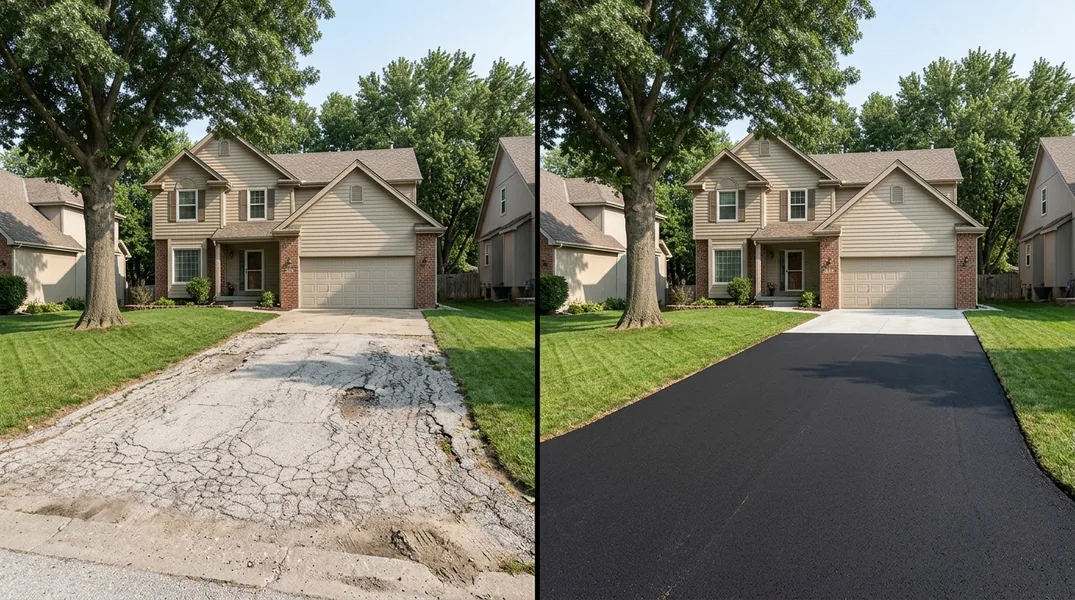
Understanding Omaha's Freeze-Thaw Cycle and Its Impact on Driveways
Omaha experiences one of the most challenging climates for driveways in the United States. The region's freeze-thaw cycle, where temperatures swing dramatically between below freezing and above freezing multiple times throughout winter, creates significant stress on any driveway material. Water seeps into tiny cracks and pores, freezes, expands, and then thaws, causing the material to fracture and deteriorate. This cycle repeats dozens of times each winter season, making driveway durability a critical concern for homeowners.
When comparing asphalt vs concrete driveway performance in Omaha's climate, it's essential to understand how each material responds to these natural forces. Both materials have distinct advantages and vulnerabilities when exposed to repeated freezing and thawing. The key difference lies in how water moves through and affects each material's structure, which ultimately determines how long your driveway will last and how much maintenance you'll need to invest over time.
How Asphalt Handles Frost and Winter Conditions
Asphalt, or blacktop as many homeowners call it, has some inherent advantages when dealing with Omaha's harsh winters. The material is naturally flexible, which means it can expand and contract with temperature changes without cracking as easily as more rigid materials. This flexibility is one of the primary reasons why Asphalt Driveway Paving & Installation remains popular in cold climates across the northern United States. When water freezes beneath an asphalt surface, the material can shift and move slightly rather than fracturing under the pressure.
However, asphalt isn't immune to winter damage. The material is porous, meaning water can penetrate the surface and seep into the base layers. Over time, this water intrusion can weaken the foundation beneath your driveway, leading to potholes and surface deterioration. This is why regular maintenance is crucial for asphalt driveways in Omaha. Sealing your asphalt driveway every two to three years helps prevent water from penetrating the surface and significantly extends the asphalt driveway lifespan. With proper care, a quality asphalt driveway can last 15 to 20 years in Omaha's climate, compared to just 8 to 12 years without regular maintenance.
Concrete Driveway Performance in Omaha's Freeze-Thaw Environment
Concrete driveways are often marketed as a more durable, low-maintenance alternative to asphalt, but this narrative doesn't always hold up in Omaha's freeze-thaw climate. Concrete is significantly more rigid than asphalt, which means it doesn't have the same flexibility to accommodate temperature fluctuations. When water freezes within concrete's porous structure, the expanding ice creates internal pressure that concrete cannot absorb. This repeated stress leads to cracking, spalling (surface deterioration), and pitting that becomes increasingly visible and problematic over time.
The concrete industry has developed air-entrained concrete, which includes tiny air pockets designed to accommodate water expansion during freezing. However, even this improved formula isn't perfectly suited to Omaha's extreme freeze-thaw cycles. Many concrete driveways in the region begin showing significant damage within 5 to 10 years, requiring expensive repairs or complete replacement. Additionally, concrete driveways are susceptible to salt damage from winter de-icing products commonly used in Omaha. Salt accelerates the deterioration process by drawing moisture into the concrete and causing chemical reactions that weaken the material from within.
Asphalt Over Concrete Driveway: Is This the Best Solution?
Many Omaha homeowners with deteriorating concrete driveways wonder if asphalt over concrete driveway installation is a viable option. The answer is yes, and it's often a cost-effective solution that extends the life of your property. When your concrete driveway has developed cracks but the base is still structurally sound, installing asphalt on top can seal out water and provide a more frost-resistant surface layer. This approach is particularly practical for homeowners looking to avoid the expense of complete concrete removal and replacement.
However, asphalt overlay success depends on proper preparation and the condition of the underlying concrete. If the concrete is severely damaged or has significant settling issues, an overlay may only provide temporary relief. A professional assessment is essential before committing to this approach. Omaha Asphalt Paving can evaluate your existing concrete driveway and recommend whether an overlay is appropriate or if a fresh Asphalt Driveway Paving & Installation project would better serve your long-term needs. When done correctly, an asphalt overlay can extend your driveway's usable life by 10 to 15 additional years.
Maintenance Requirements: Asphalt vs Concrete in Omaha Winters
The maintenance demands of asphalt and concrete driveways differ significantly, especially in Omaha's climate. Asphalt requires proactive care to perform well through freeze-thaw cycles. Sealcoating every two to three years, filling cracks promptly, and addressing minor damage before it becomes severe are all part of responsible asphalt ownership. When damage does occur, Pothole Repair & Asphalt Patching services can quickly restore your driveway's integrity and prevent further deterioration. While this ongoing maintenance requires an investment, it's typically far less expensive than dealing with major concrete repair or replacement.
Concrete driveways, while marketed as low-maintenance, still require attention in Omaha's climate. Sealing concrete driveways is equally important as sealing asphalt, though concrete sealers must be reapplied more frequently. Once cracks appear in concrete, they tend to spread rapidly during winter, requiring expensive repairs. Asphalt Resurfacing & Overlay options provide a more economical path forward when your concrete driveway shows age. The reality is that neither material is truly maintenance-free, but asphalt offers more flexibility in repair options and typically costs less to maintain over its lifespan.
Making Your Decision: Which Driveway Material Wins in Omaha
For Omaha homeowners, asphalt emerges as the superior choice for handling freeze-thaw cycles and harsh winters. The material's natural flexibility, proven performance in northern climates, and cost-effective maintenance options make it the practical winner. While concrete may look cleaner initially and appeals to homeowners seeking a modern aesthetic, the climate realities of Omaha work against concrete's long-term durability and value proposition. An asphalt driveway installed and maintained properly will outlast concrete in this region and cost significantly less to repair when issues arise.
Your decision should also consider your budget and long-term plans. If you're looking for immediate pricing and want to understand your options fully, Omaha Asphalt Paving is ready to help. Contact us at (402) 807-2119 or visit our website to request a free estimate for your driveway project. Whether you need a new Asphalt Driveway Paving & Installation, repairs to your existing surface, or an overlay solution, our experienced team can provide expert guidance tailored to Omaha's unique climate challenges and your specific needs.
Looking for a professional asphalt paving contractor in Omaha? Omaha Asphalt Paving responds fast for all your asphalt paving needs.
Get a Free Quote