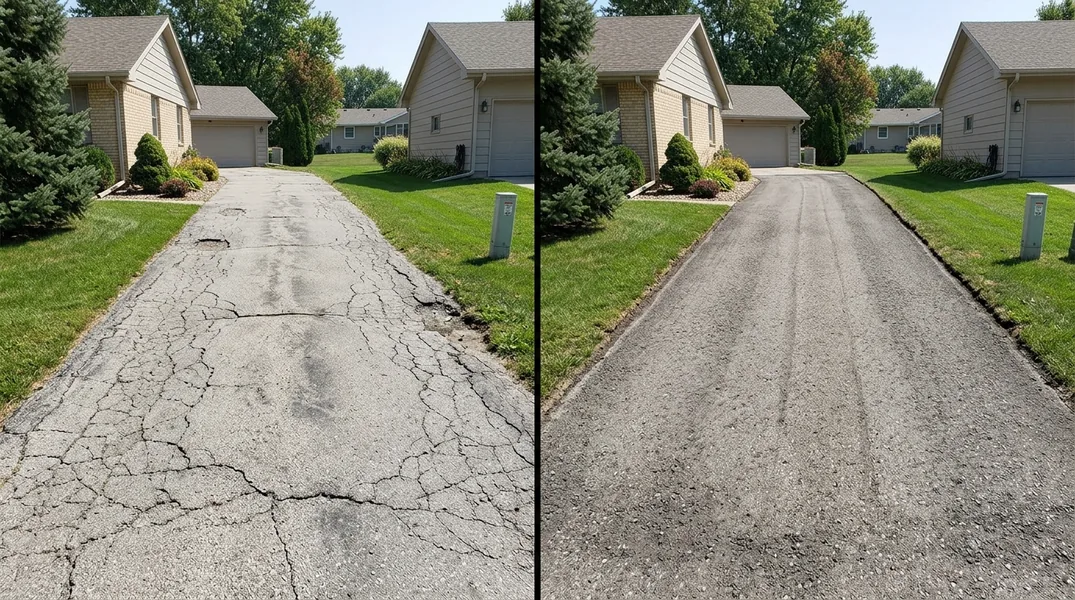
Understanding Freeze-Thaw Damage in Omaha
When spring arrives in Omaha, homeowners often discover that their driveways have suffered significant damage during the harsh winter months. Freeze-thaw cycles are one of the most destructive forces on asphalt surfaces, and our climate makes this a real concern every year. Understanding how this damage occurs is the first step toward protecting your investment.
Freeze-thaw damage happens when water seeps into small cracks in your asphalt. As temperatures drop below freezing, that water expands, pushing the asphalt apart and creating larger cracks. When the temperature rises, the water melts and the asphalt contracts, leaving gaps and weak spots. Over multiple freeze-thaw cycles throughout an Omaha winter, this process repeats dozens of times, accelerating deterioration. If left unaddressed, these small cracks become potholes, and the structural integrity of your entire driveway can be compromised.
What to Inspect This Spring: A Homeowner's Checklist
Now that winter is behind us, it's time to conduct a thorough inspection of your driveway. Walk the entire surface on a dry, sunny day so you can see damage clearly. Start by looking for cracks of any size, from hairline fractures to wider gaps. Pay special attention to areas where water tends to collect, such as low spots or near the edges where the driveway meets the lawn or garage. These areas are more prone to water infiltration and subsequent freeze-thaw damage.
Next, check for potholes, which are essentially craters where the asphalt has broken away entirely. Even small potholes should be taken seriously because they grow larger with each passing vehicle and rainstorm. Look for areas where the surface has become uneven or where you notice slight depressions. Also inspect the edges of your driveway, as these are often the first places to show signs of deterioration. If you notice significant damage, it's time to contact a professional. Driveway Repair should be handled promptly to prevent further deterioration and more expensive repairs down the road.
Pothole Repair & Patching: When DIY Isn't Enough
Many homeowners are tempted to tackle minor asphalt damage themselves or hire the cheapest contractor they can find. This is where you need to be especially cautious about falling victim to a leftover asphalt scam. Some unscrupulous contractors purchase leftover asphalt from other job sites at a discount and use it to patch driveways. This material is often old, improperly mixed, or contaminated, and it won't bond properly to your existing asphalt. Within months, these patches fail, and you'll be back to square one.
Pothole Repair & Asphalt Patching requires proper preparation, quality materials, and professional expertise. A reputable contractor will clean out the damaged area, apply a tack coat to help the new asphalt adhere, and use fresh, properly heated asphalt mixed to the correct specifications. They'll also compact the patch thoroughly to ensure it bonds with the surrounding surface. When you're evaluating contractors, ask specifically about their asphalt sourcing and whether they use recycled or leftover material. A trustworthy company will be transparent about their materials and stand behind their work with a warranty.
How to Choose a Paving Contractor and Avoid Driveway Paving Scams
The stakes are high when selecting a contractor for driveway work, and unfortunately, driveway paving scams are common. Homeowners often receive unsolicited calls or door-to-door visits from contractors offering suspiciously low pricing or claiming they have leftover asphalt from a nearby job. These are red flags. Legitimate contractors don't typically cold-call homeowners, and they don't use leftover materials from other projects. When choosing a paving contractor, start by asking for references and verifying their license and insurance. Check online reviews on Google, the Better Business Bureau, and local community pages.
Ask detailed questions to ask a paving contractor before you sign anything. Request a written estimate that specifies the materials to be used, the scope of work, the timeline, and the total cost. Don't accept vague language like 'asphalt patching' without specifics about how deep the patch will go or what preparation will be done. Ask whether they're using virgin asphalt or recycled material, and request to see their equipment and crew credentials. A professional contractor will welcome your questions and provide clear, detailed answers. They should also explain their warranty and what it covers. If a contractor becomes evasive or pressures you to decide immediately, walk away.
When to Consider Asphalt Resurfacing vs. Repair
If your driveway has multiple areas of damage or the overall surface has become rough and uneven, repair alone may not be the best solution. Asphalt Resurfacing & Overlay is a cost-effective alternative to full replacement that can extend the life of your driveway by ten to fifteen years. Resurfacing involves applying a new layer of asphalt over the existing base, which is less disruptive and less expensive than removing and replacing the entire driveway. This option works well if the base layer is still structurally sound but the surface is worn and damaged.
To determine whether your driveway needs repair, resurfacing, or replacement, a professional inspection is essential. A qualified contractor will assess the extent of the damage, check the integrity of the base layer, and recommend the most cost-effective solution for your situation. If you're seeing widespread cracking, multiple potholes, or surface deterioration across more than thirty percent of the driveway, resurfacing is likely your best bet. Contact Omaha Asphalt Paving at (402) 807-2119 or request a free estimate to learn which option makes sense for your property.
Prevention and Maintenance to Protect Your Driveway
The best defense against freeze-thaw damage is prevention. Once you've addressed any existing damage, take steps to minimize future problems. Seal coat your driveway every two to three years. This protective layer fills small pores in the asphalt and prevents water from seeping in, significantly reducing the impact of freeze-thaw cycles. Additionally, fill any new cracks as soon as they appear, before water can penetrate deeper. Keep your driveway clean and ensure that water drains away properly. If you notice puddles forming on your driveway after rain, this indicates poor drainage, and you should consider having the surface graded or repaired to improve water flow.
Regular maintenance is far more affordable than major repairs or replacement. Inspect your driveway at least twice a year, in spring and fall, and address any issues promptly. Avoid using harsh de-icing chemicals that can accelerate deterioration, and try to remove snow and ice gently without gouging the surface. When spring arrives next year, you'll be grateful you invested in preventive care. If you're unsure about the condition of your driveway or need professional guidance on maintenance, the team at Omaha Asphalt Paving is here to help. Call (402) 807-2119 today to discuss your driveway's needs and get expert advice tailored to your specific situation.
Looking for a professional asphalt paving contractor in Omaha? Omaha Asphalt Paving responds fast for all your asphalt paving needs.
Get a Free Quote