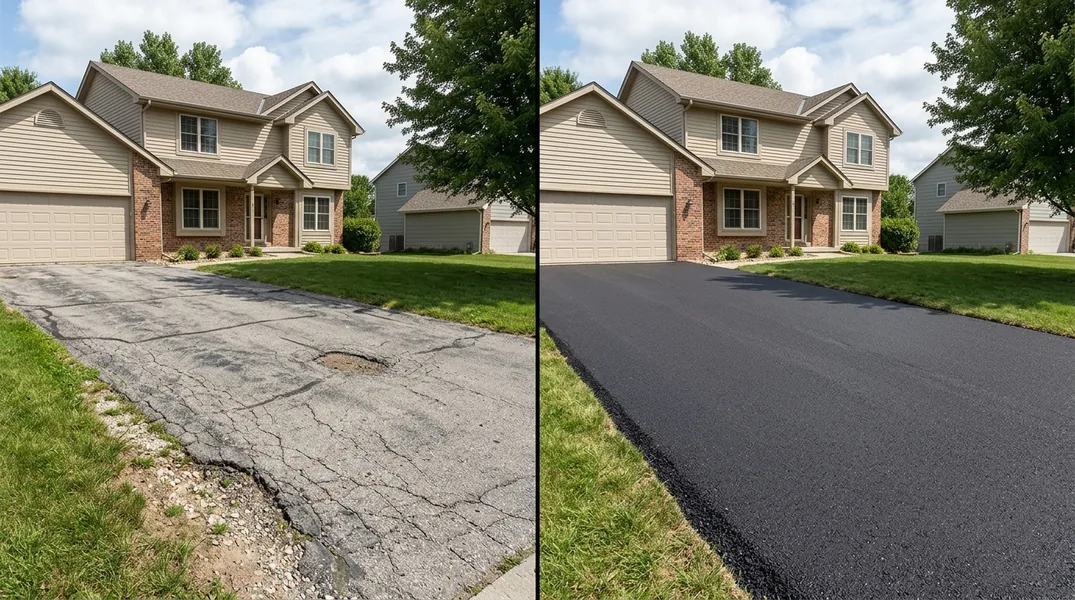
Understanding Asphalt Driveway Lifespan in Omaha's Climate
If you own a home in Omaha, you know that our climate is tough on driveways. The question of how long does an asphalt driveway last is one we hear frequently from homeowners who are planning their property maintenance budgets. The answer isn't quite as simple as giving you a single number, because several factors unique to our region play a significant role in determining your driveway's longevity.
Under ideal conditions and with proper maintenance, a typical asphalt driveway can last anywhere from 15 to 20 years. However, in Omaha, where we experience harsh winters with repeated freeze-thaw cycles, snow, ice, and road salt exposure, many driveways deteriorate faster than the national average. The freeze-thaw cycle is particularly damaging because water seeps into small cracks in the asphalt, freezes during winter, expands, and then thaws in spring, widening those cracks further. This cycle repeats year after year, accelerating the breakdown of your asphalt surface.
How Freeze-Thaw Cycles Damage Asphalt in Omaha
The freeze-thaw cycle is the primary culprit behind premature asphalt driveway deterioration in Omaha. Our winters bring temperatures that regularly dip below freezing, and our springs bring warming trends that cause snow and ice to melt. This constant temperature fluctuation creates an environment where moisture becomes your driveway's worst enemy. When water enters the asphalt through existing cracks or porous surfaces, it expands as it freezes, putting pressure on the surrounding material. When it thaws, it leaves behind tiny voids that accumulate over time.
Beyond the freeze-thaw cycle itself, Omaha winters also bring road salt and de-icing chemicals that are applied to driveways and nearby roads. These chemicals accelerate oxidation and break down the binder that holds asphalt particles together. The combination of mechanical stress from freezing water and chemical degradation from salt creates a double threat to your driveway's integrity. This is why an asphalt driveway lifespan in Omaha may be closer to 12 to 18 years rather than the 15 to 20 years you might achieve in milder climates.
Signs Your Omaha Driveway Needs Repair or Replacement
Knowing when to replace asphalt driveway surfaces requires understanding the warning signs that indicate your driveway is reaching the end of its useful life. The first visible sign is usually cracking. Small, hairline cracks might seem harmless, but they're actually gateways for water infiltration. If you notice a network of interconnected cracks resembling alligator skin, your driveway is likely in advanced stages of deterioration. This pattern indicates that the base layer beneath the asphalt is failing, and Driveway Repair may no longer be sufficient to extend the driveway's life.
Potholes are another critical indicator that your driveway needs attention. These holes form when the asphalt surface fails and chunks break away, often exacerbated by the freeze-thaw cycle. While smaller potholes can sometimes be addressed with Pothole Repair & Asphalt Patching, widespread potholes suggest that your driveway is deteriorating beyond the point of economical repair. Fading color, rutting (sunken areas from traffic), and a general softness or sponginess underfoot are also signs that your asphalt has oxidized significantly and lost its structural integrity. If your driveway is 15 years old or older and showing multiple signs of distress, replacement may be more cost-effective than continued repairs.
Extending Your Asphalt Driveway Lifespan Through Maintenance
While Omaha's climate does present challenges, proper maintenance can significantly extend how long your asphalt driveway lasts. The most important step is to seal coat your driveway every two to three years. Seal coating creates a protective barrier that prevents water infiltration and protects the asphalt from oxidation caused by UV rays and chemicals. This relatively inexpensive preventive measure can add several years to your driveway's life and is far more cost-effective than dealing with major repairs down the road.
Regular cleaning and prompt crack repair are equally important. Remove leaves, debris, and standing water regularly, as these can trap moisture against the asphalt surface. Fill small cracks as soon as you notice them using a quality asphalt crack filler. In Omaha, where we experience significant temperature swings, addressing cracks before winter arrives is particularly important. Additionally, avoid allowing heavy vehicles to sit in one spot for extended periods, and try to minimize salt exposure by rinsing your driveway after winter weather events. If you're unsure about the best maintenance approach for your specific driveway, the professionals at Omaha Asphalt Paving can provide guidance tailored to your situation.
When to Consider Asphalt Resurfacing vs. Full Replacement
If your driveway is showing significant wear but the base layer is still intact, Asphalt Resurfacing & Overlay may be a viable option that falls between simple repairs and complete replacement. This process involves applying a new layer of asphalt over the existing surface, essentially giving your driveway a second life. Resurfacing is typically more affordable than full replacement and can add 7 to 10 additional years to your driveway's lifespan, making it an attractive middle-ground solution for many homeowners.
However, resurfacing is only possible if the underlying base is still structurally sound. If your driveway has extensive cracking, base failure, or drainage issues, full removal and replacement will be necessary. A professional assessment from Omaha Asphalt Paving can help you determine which option makes the most sense for your property. The decision ultimately depends on the current condition of your driveway, your budget, and how long you plan to remain in your home.
Asphalt Driveway Paving & Installation Cost in Omaha: What to Budget
Understanding the pricing for driveway work helps you make an informed decision about whether to repair, resurface, or replace your asphalt. The cost of Asphalt Driveway Paving & Installation varies based on the size of your driveway, the complexity of the project, site conditions, and current material costs. A new asphalt driveway typically costs between three and six dollars per square foot for basic installation, though this can vary. For a standard two-car driveway of about 500 square feet, you're looking at a range that could span several thousand dollars.
Resurfacing is generally more affordable than full replacement, often costing one to three dollars per square foot, while seal coating and repairs are the most budget-friendly maintenance options. Rather than guessing at costs, the best approach is to contact Omaha Asphalt Paving at (402) 807-2119 or request a free estimate. Our team can assess your driveway's condition, discuss your options, and provide transparent pricing so you can make the decision that works best for your home and budget.
Looking for a professional asphalt paving contractor in Omaha? Omaha Asphalt Paving responds fast for all your asphalt paving needs.
Get a Free Quote