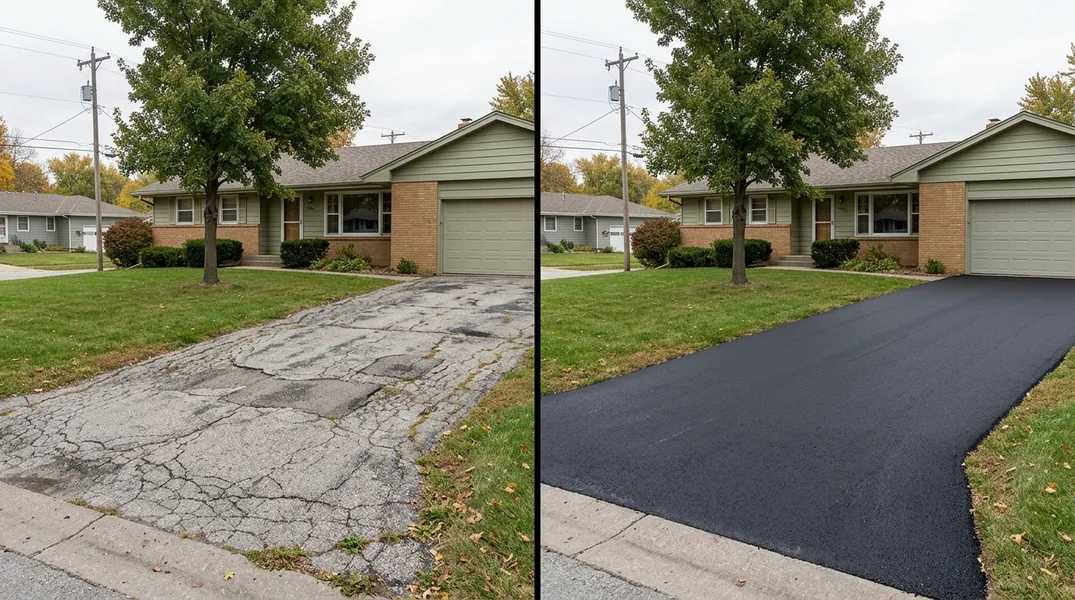
Understanding Omaha's Loess Soil and Its Impact on Driveways
If you've lived in Omaha for more than a few winters, you've likely noticed how driveways seem to develop problems faster here than in other parts of the country. The culprit isn't just freeze-thaw cycles, though those certainly play a role. The real issue lies beneath the surface: loess soil.
Loess is a fine-grained, wind-deposited sediment that covers much of Omaha and the surrounding region. Unlike clay or compacted subsoil found in other areas, loess has a unique characteristic that makes it particularly challenging for driveway construction. It's highly susceptible to moisture infiltration and shifting, especially during seasonal temperature changes. When water penetrates loess soil and freezes, it expands with tremendous force. This expansion, known as frost heave, pushes upward on whatever sits above it, including your asphalt driveway. Without a properly engineered base depth, your driveway becomes vulnerable to the kind of damage that leads to expensive Driveway Repair work down the road.
What Is Frost Heave and Why It Matters for Your Driveway
Frost heave occurs when water in soil freezes and expands, creating upward pressure that can literally lift asphalt surfaces. In Omaha's climate, where winter temperatures regularly dip below freezing and spring thaws are common, this cycle repeats multiple times each season. The repeated lifting and settling of your driveway creates stress points in the asphalt layer, which eventually crack and fail.
The problem escalates when water seeps into those cracks. Once moisture gets beneath your asphalt surface, it finds its way into the base layers. During the next freeze, that water expands, widening cracks and creating voids. By spring, you're left with a compromised driveway structure. This is why homeowners often call for Pothole Repair & Asphalt Patching services year after year, spending money on temporary fixes rather than investing in a durable foundation from the start.
The key to preventing frost heave damage is ensuring your driveway has an adequate base depth that extends below the frost line. In the Omaha area, this typically means a minimum of 12 to 18 inches of properly compacted base material, depending on soil conditions and site-specific factors. This depth allows the base to absorb and distribute frost heave pressure without transmitting it directly to your asphalt layer.
Base Depth Requirements for Omaha Driveways: Non-Negotiable Standards
When Omaha Asphalt Paving designs a driveway, we don't cut corners on base depth, especially for loess soil conditions. A proper Asphalt Driveway Paving & Installation project in this region requires careful attention to subsurface conditions. The base layer serves as a shock absorber, distributing vehicle loads and frost pressures across a wider area so that individual stress points don't overwhelm the asphalt above.
For residential driveways in Omaha, we typically recommend a minimum of 4 to 6 inches of quality asphalt over a 12 to 18-inch base of compacted granular material (crushed limestone or gravel). This combination provides the resilience needed to handle both seasonal frost heave and the weight of vehicles. Some properties with particularly problematic soil conditions may require even deeper bases or stabilized subgrades.
Skimping on base depth is a false economy. A contractor who installs only 4 to 6 inches of base material might save money upfront, but homeowners pay the price within a few years through accelerated deterioration, recurring pothole problems, and the need for frequent repairs. The structural integrity of your driveway is only as good as what lies beneath the asphalt surface.
Repair or Replace: How Base Depth Affects Your Decision
One of the most common questions homeowners ask is whether to repair their existing driveway or invest in a new one. The answer often hinges on base depth and condition. If your driveway is experiencing widespread cracking, potholes, or visible heaving, the problem likely isn't just the asphalt layer. It's probably a base depth issue or compromised base material that has failed to protect against frost heave.
When you're deciding between Asphalt Resurfacing & Overlay and a full replacement, consider how old your driveway is and what condition its base is in. If the base has already been compromised by years of frost heave cycles, simply laying new asphalt on top (an overlay) is treating the symptom, not the cause. The new layer will fail the same way the old one did because the underlying problem persists.
A complete replacement allows you to build the driveway properly from the ground up, with adequate base depth for Omaha's specific soil and climate conditions. Yes, this is a larger upfront investment, but it delivers a durable driveway that will serve you reliably for 15 to 20 years or more. Compare that to repeated Pothole Repair & Asphalt Patching cycles every few years, and the long-term cost savings become clear.
Asphalt Driveway Paving & Installation Cost in Omaha: What to Budget
Understanding pricing for driveway work in Omaha requires recognizing that proper base depth adds cost, but it's money well spent. A quality Asphalt Driveway Paving & Installation project with appropriate base depth for loess soil conditions typically costs more than a quick, shallow installation. However, the durability difference is substantial.
The cost of a new driveway depends on several factors: the size of the area, existing site conditions, whether excavation and base preparation are needed, and the quality of materials used. In the Omaha area, expect to budget accordingly for proper base work. Contractors who offer suspiciously low estimates may be cutting corners on base depth, which will cost you far more in repairs down the line. When you request a free estimate, make sure to ask specifically about base depth recommendations and why those recommendations are appropriate for your property's soil conditions.
When to Call a Professional for Driveway Assessment Near Me
If you're noticing early signs of driveway problems like small cracks, minor settling, or the beginning of pothole formation, don't wait. The longer frost heave and moisture infiltration go unchecked, the more extensive (and expensive) the eventual damage becomes. A professional assessment can determine whether your driveway needs repairs, resurfacing, or complete replacement.
Omaha Asphalt Paving has been serving homeowners throughout the region with honest, professional guidance about driveway condition and the right solution for each situation. We understand loess soil and its specific challenges because we work with it every day. If you're concerned about your driveway's condition or want to ensure a new driveway is built with proper base depth, contact us at (402) 807-2119 or visit our website to schedule your free estimate. We'll assess your property, explain what's happening beneath the surface, and recommend the most cost-effective solution for your needs.
Looking for a professional asphalt paving contractor in Omaha? Omaha Asphalt Paving responds fast for all your asphalt paving needs.
Get a Free Quote